
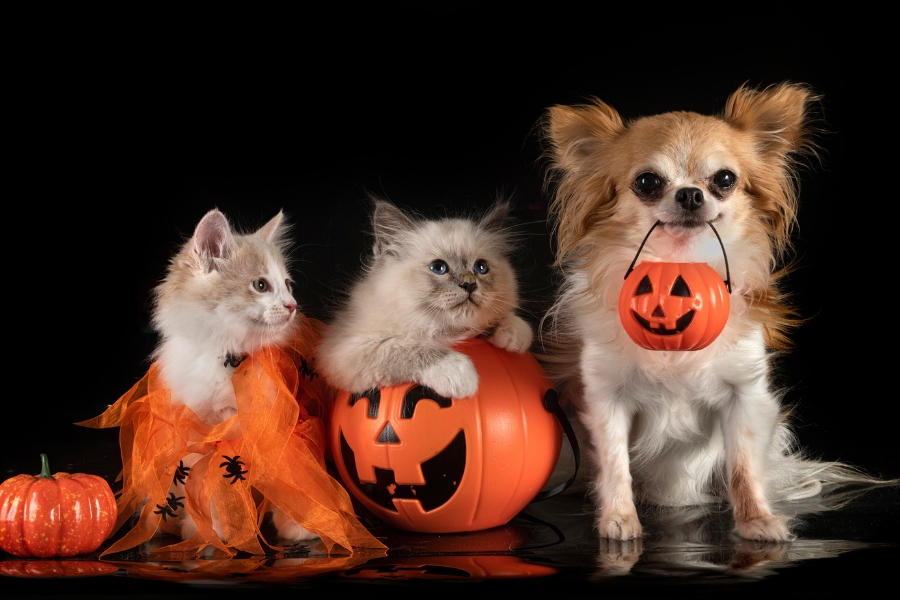
Halloween is one of the most exciting nights of the year—but it can also be stressful and dangerous for pets. With loud doorbells, strangers in costumes, glowing decorations, and candy everywhere, our furry friends can easily become anxious or overwhelmed.
Following easy safety tips for pets on Halloween night will help ensure your dog, cat, or other pets remain safe, calm, and happy while you enjoy the festivities.
Why Pets Need Extra Care on Halloween
Pets rely on familiar routines and environments. Sudden changes—like loud noises, strangers at the door, or costumes—can trigger stress or even health problems. Common signs of stress include:
- Panting, trembling, or shaking
- Hiding or refusing to come out
- Barking, growling, or hissing
- Loss of appetite or vomiting
- Restlessness or pacing
Even pets that usually enjoy visitors can feel overwhelmed. Planning ahead is key to a calm and safe Halloween.
1. Keep Candy and Dangerous Foods Out of Reach
Chocolate, xylitol, raisins, grapes, and artificial sweeteners are toxic to pets. Even small amounts can cause vomiting, diarrhea, or severe health issues.
Tips for safety:
- Place candy bowls on high shelves or in closed rooms.
- Educate children not to share candy with pets.
- Avoid feeding pets any human treats, baked goods, or unknown ingredients.
2. Create a Quiet Safe Space
Crowds, costumes, and doorbell rings can be overwhelming for pets. A designated quiet room helps them feel secure during peak activity.
How to set it up:
- Choose a calm room away from doors and windows.
- Include bedding, favorite toys, and blankets.
- Play soft music or white noise to mask outside commotion.
- Use calming collars or pheromone diffusers if needed.
This retreat allows pets to relax without fear, even if the house is full of activity.
3. Costume Safety Basics
Costumes can be fun, but not all pets tolerate them well. Stress or injury can occur if outfits are uncomfortable.
Tips for safe costumes:
- Introduce costumes gradually a few days before Halloween.
- Avoid tight clothing, hats that cover the eyes, or small chewable parts.
- Watch for signs of discomfort like trembling or pacing.
- If your pet resists, skip the costume or use a festive collar instead.
4. Monitor Crowds and Visitors
Door-to-door trick-or-treating brings strangers and activity that can unsettle pets.
Helpful strategies:
- Keep pets in a separate room or gated area away from visitors.
- Leash or secure outdoor pets if they need to go outside.
- Limit exposure for shy or anxious animals.
- Reward calm behavior with treats or praise.
5. Check Decorations for Hazards
Halloween decorations are tempting for pets but can be dangerous.
Things to watch for:
- Open flames and candles that can burn paws or fur
- Electrical cords that can be chewed
- Small decorations that could be swallowed
- Glow sticks, which contain chemicals that irritate the mouth
Always supervise pets around decorations or place items out of reach.
6. Maintain Normal Routine
Pets feel more secure with predictable routines.
- Stick to regular feeding, walking, and play schedules.
- Give attention before trick-or-treating begins.
- Gradually introduce new experiences to avoid overload.
7. Be Prepared for Emergencies
Even with precautions, accidents can happen.
- Keep your veterinarian’s contact information handy.
- Have a small first-aid kit ready for minor incidents.
- Watch for unusual behavior, vomiting, or signs of distress.
- If unsure about a food, treat, or injury, contact your veterinarian—they can provide guidance for your pet’s safety.
Quick Halloween Pet Safety Checklist
✅ Keep candy and toxic foods out of reach
✅ Set up a quiet, safe space for pets
✅ Monitor costume comfort and remove if needed
✅ Limit exposure to crowds and trick-or-treat traffic
✅ Check decorations for hazards
✅ Maintain regular routines
✅ Know emergency vet contacts
Halloween can be fun for the whole family—including pets—when safety comes first. By following these easy safety tips for pets on Halloween night, you’ll create a calm, enjoyable, and stress-free celebration. Remember, your veterinarian is the best resource for personalized guidance to keep your furry friends happy and safe during Halloween.
FAQs
Q1. Can my dog go trick-or-treating?
Ans. Yes, if your dog is comfortable with crowds, on a leash, and wearing a safe accessory. Monitor for signs of stress.
Q2. Are glow sticks safe for pets?
Ans. No—if chewed, they can irritate your pet’s mouth or stomach. Keep them out of reach.
Q3. What should I do if my cat hides all night?
Ans. Allow them to stay in their safe space with toys and bedding. Avoid forcing interactions.
Q4. Can Halloween decorations harm pets?
Ans. Yes—candles, cords, and small items can cause burns, choking, or poisoning. Place decorations safely out of reach.
Q5. How can I keep pets calm during noisy celebrations?
Ans. Provide a safe room, soft music, and consider vet-approved calming aids for anxious pets.
Q6. Who should I contact in an emergency?
Ans. Always have your veterinarian’s contact info ready. If your pet ingests something toxic or shows distress, contact them immediately.